
Singapore social media ops should not reuse one post everywhere
26 April 2026 · 6 min read
In Singapore, high reach does not guarantee high conversion. A stronger model uses one topic system, but rewrites the story by channel and language.
Article
In Singapore, high reach does not guarantee high conversion. A stronger model uses one topic system, but rewrites the story by channel and language.

IT Manager (Certified CISSP)
Mike is the IT Manager at Mayson AI with more than 8 years of experience in enterprise IT operations, AI deployment, and development. He specializes in applying modern technology to optimize business workflows and is committed to delivering highly reliable digital transformation solutions for enterprises.
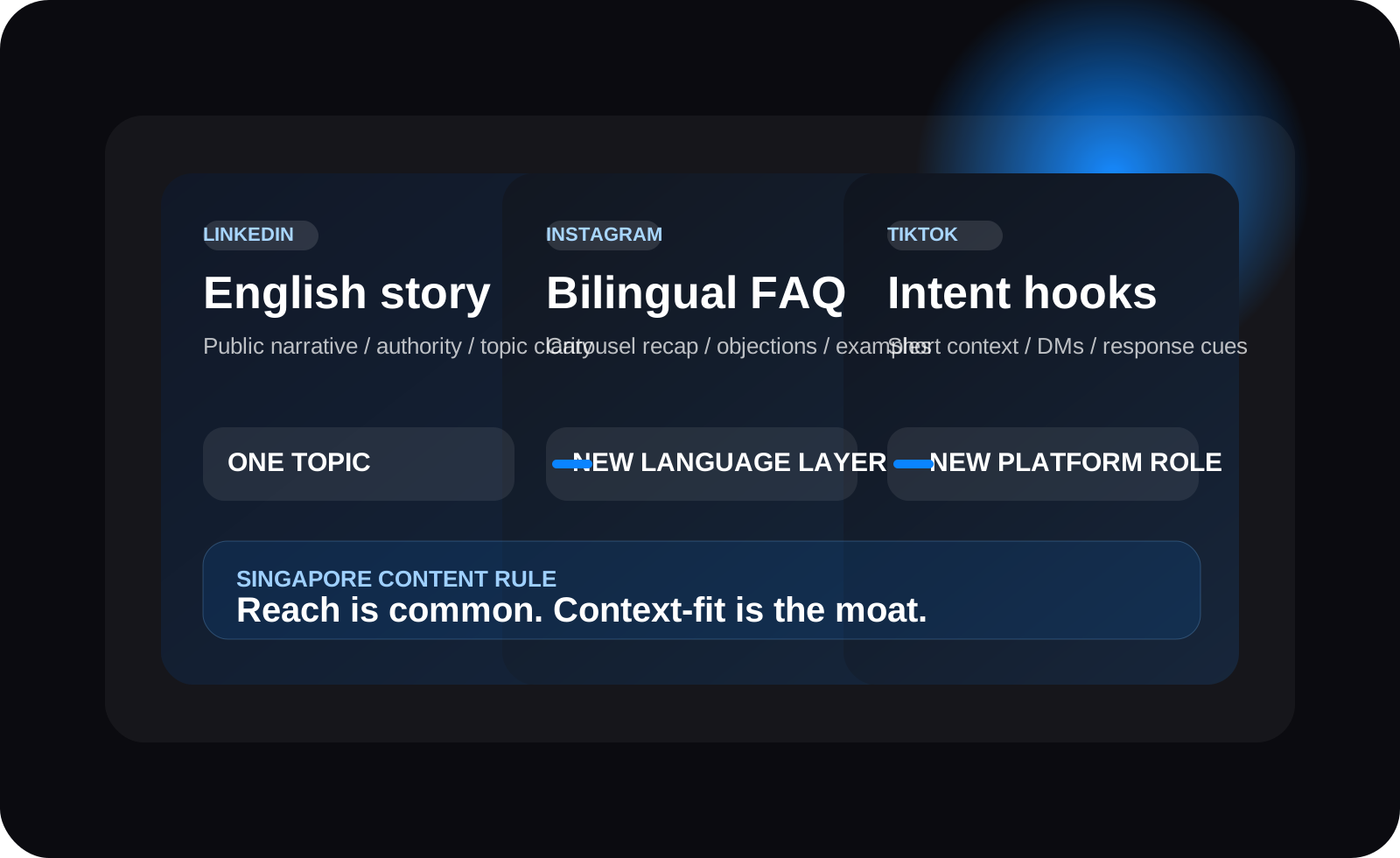
Bottom line: in Singapore, the strongest social-media operating model is not one bilingual post copied everywhere. It is one topic system rewritten by channel and language. DataReportal's Digital 2025 Singapore report shows 5.16 million social-media user identities in the market, equal to 88.2% of the population. LinkedIn's ad tools show 4.80 million members in Singapore, TikTok reaches 3.63 million adults, and Instagram reaches 3.15 million users. Reach is already abundant; context-fit is the harder advantage.
Why Singapore needs language layering
Singapore is not a one-language communication market. The Singapore Census 2020 findings show that English was the most frequently spoken home language for 48.3% of residents, and the official summary notes that more than 80% of residents who used English most often at home also used a vernacular language. That matters operationally. English is often better for public narrative, professional signaling, and search visibility, while Chinese or bilingual variants are often better for high-intent objections, examples, and direct conversion conversations.
"the main language of a code-switched ad should match that of its medium"
That line comes from Bishop and Peterson's Journal of Advertising research on code-switched advertising. Their finding fits Singapore well: match language to media context when you want stronger recall and cultural sensitivity. Kubat and Swaminathan's IJRM paper adds another useful nuance: for brands that are not heavily tied to one cultural identity, bilingual advertising can improve brand liking among bicultural audiences. The implication is practical: bilingual does not mean mixing both languages into every asset.
How to run this without doubling content costs
A workable split is to let LinkedIn, website articles, and longer explainers carry the English-led narrative. Use Chinese or bilingual variants for FAQ slides, offer clarification, objection handling, carousel summaries, and direct-message follow-up. The goal is not translation for its own sake. The goal is to let one topic perform different jobs: English helps the market find you, and bilingual content helps qualified buyers move closer to inquiry.
Continue to the Related Service
The service page most closely tied to this article is linked below so the insight and the commercial page reinforce the same topic cluster.
Social Media Operations
Build a cross-platform content engine that improves reach, engagement, and inbound interest.